Рефрейминг (48) иммунитет – серотонин/ дофамин - эмоции - поведение - рефрейминг
metanymous в Metapractice
![[userpic]](/media/4587bb8388ee4725e346652254c934c26f18585afe1756ca95df939553e68845)
| Рефрейминг | |||||
| 47. «Фиалковый» и «эвкалиптовый» рефрейминги | metanymous | ||||
| Комплаентность vs коучинг лечебный | |||||
| 1. Берёт начало в перинатальной матрице-3 | metanymous | ||||
| Рефрейминг | |||||
| 49. Рефрейминг на пачке сигарет | vseslavrus | ||||
| Темы MetaPractice (10.11.17) - 231 темы | |||||
| Темы MetaPractice (10.11.17) - 231 темы | metanymous | ||||
https://metapractice.livejournal.com/558512.html
Activation of Immune T Cells Leads to Behavioral Changes
http://neurosciencenews.com/t-cell-behavioral-changes-7792/
Summary: A new Nature Immunology study reveals immune cells alter the body’s metabolism when activated, leading to changes in behavior. Source: RIKEN.
Scientists from the RIKEN Center for Integrative Medical Sciences in Japan and collaborators have found that T cells — immune cells that help to protect the body from infections and cancer — change the body’s metabolism when they are activated, and that this activation actually leads to changes in behavior.
It is currently known that individual T cells change their metabolism to meet their energy needs after being activated, but the systemic metabolic effect of sustained activation of the immune system has remained unexplored. To understand the systemic effects, the group looked at T cell activation in mice designed to lack a surface receptor called PD-1, which is necessary for inhibiting the activity of T cells. T cells remain activated in mice without the receptor, similar to those in the immune systems of people with certain types of autoimmune disease. In these mice, they found that amino acids–molecules that are used to build proteins–were depleted in the blood, and that they were increased in the T cells themselves, implicating the T cells in the change.
The team tracked and imaged amino acids in many organs, and found that the depletion of amino acids from the blood was taking place due to the accumulation of amino acids in activated T cells in the lymph nodes, showing that strong or long lasting immune responses can cause metabolic changes elsewhere in the body.
The remaining question was whether this depletion of amino acids was actually having any systemic effect. By analyzing the biochemistry of the brain, they found that the systemic decrease in the amino acids tryptophan and tyrosine in blood led to lower amounts available in the brain, limiting production of the neurotransmitters serotonin and dopamine. These neurotransmitters affect emotions, motivation and fear–for example, serotonin is often a target of drugs that combat depression. The researchers found that their depletion in mice without PD-1 resulted in behavioral changes dominated by anxiety and exacerbated fear responses, which could be remedied by providing a diet rich in an essential amino acid.
This research, which was published in Nature Immunology, required teamwork and collaboration to link diverse fields of biology: immunology, neuroscience and behavior, using cutting edge metabolite measurements and imaging methods. “Together these data indicate that excessive activation of T cells causes a systemic metabolomic shift with consequences that extend beyond the immune system” says Michio Miyajima, one of the four first co-authors of this study.
According to Sidonia Fagarasan, the leader of the group, “We were fascinated to see that this happens-as it revealed the power of the immune system to influence many aspects of the body’s physiology besides infection and immunity. It will be interesting in the future to investigate whether the trigger of fear and anxiety by T cell activation is merely a side effect of the process, or whether there is an evolutionary benefit of this adaptation. We would also like to further investigate these changes, as the blockade of PD-1 is being investigated as an anti-cancer therapy, and it is important to understand if this could have behavioral changes such as increases in anxiety.”
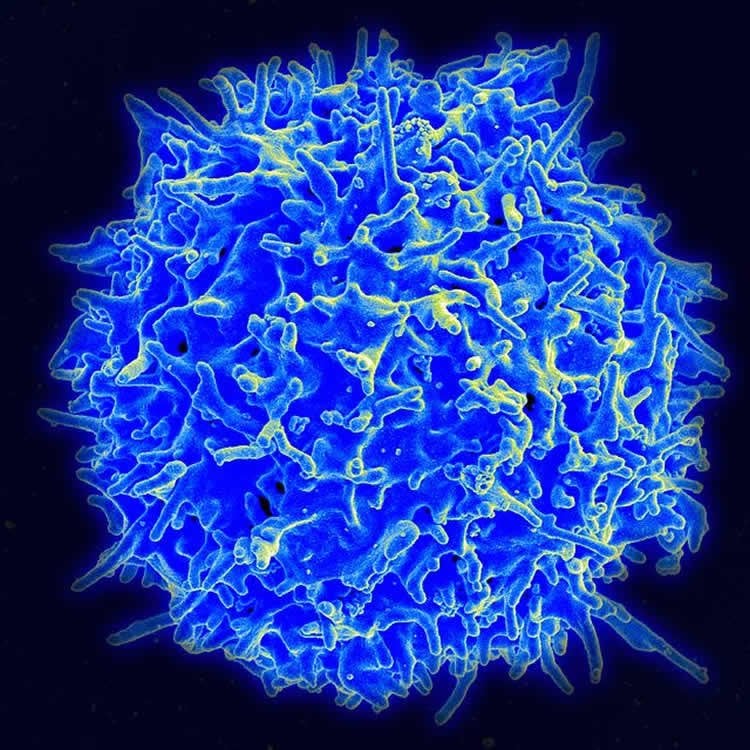
In these mice, they found that amino acids–molecules that are used to build proteins–were depleted in the blood, and that they were increased in the T cells themselves, implicating the T cells in the change. Image is in the public domain.
http://ljsearch.metapractice.ru/
Activation of Immune T Cells Leads to Behavioral Changes
http://neurosciencenews.com/t-cell-behavioral-changes-7792/
Summary: A new Nature Immunology study reveals immune cells alter the body’s metabolism when activated, leading to changes in behavior. Source: RIKEN.
Scientists from the RIKEN Center for Integrative Medical Sciences in Japan and collaborators have found that T cells — immune cells that help to protect the body from infections and cancer — change the body’s metabolism when they are activated, and that this activation actually leads to changes in behavior.
It is currently known that individual T cells change their metabolism to meet their energy needs after being activated, but the systemic metabolic effect of sustained activation of the immune system has remained unexplored. To understand the systemic effects, the group looked at T cell activation in mice designed to lack a surface receptor called PD-1, which is necessary for inhibiting the activity of T cells. T cells remain activated in mice without the receptor, similar to those in the immune systems of people with certain types of autoimmune disease. In these mice, they found that amino acids–molecules that are used to build proteins–were depleted in the blood, and that they were increased in the T cells themselves, implicating the T cells in the change.
The team tracked and imaged amino acids in many organs, and found that the depletion of amino acids from the blood was taking place due to the accumulation of amino acids in activated T cells in the lymph nodes, showing that strong or long lasting immune responses can cause metabolic changes elsewhere in the body.
The remaining question was whether this depletion of amino acids was actually having any systemic effect. By analyzing the biochemistry of the brain, they found that the systemic decrease in the amino acids tryptophan and tyrosine in blood led to lower amounts available in the brain, limiting production of the neurotransmitters serotonin and dopamine. These neurotransmitters affect emotions, motivation and fear–for example, serotonin is often a target of drugs that combat depression. The researchers found that their depletion in mice without PD-1 resulted in behavioral changes dominated by anxiety and exacerbated fear responses, which could be remedied by providing a diet rich in an essential amino acid.
This research, which was published in Nature Immunology, required teamwork and collaboration to link diverse fields of biology: immunology, neuroscience and behavior, using cutting edge metabolite measurements and imaging methods. “Together these data indicate that excessive activation of T cells causes a systemic metabolomic shift with consequences that extend beyond the immune system” says Michio Miyajima, one of the four first co-authors of this study.
According to Sidonia Fagarasan, the leader of the group, “We were fascinated to see that this happens-as it revealed the power of the immune system to influence many aspects of the body’s physiology besides infection and immunity. It will be interesting in the future to investigate whether the trigger of fear and anxiety by T cell activation is merely a side effect of the process, or whether there is an evolutionary benefit of this adaptation. We would also like to further investigate these changes, as the blockade of PD-1 is being investigated as an anti-cancer therapy, and it is important to understand if this could have behavioral changes such as increases in anxiety.”
In these mice, they found that amino acids–molecules that are used to build proteins–were depleted in the blood, and that they were increased in the T cells themselves, implicating the T cells in the change. Image is in the public domain.
http://ljsearch.metapractice.ru/
2 комментария
сначала старые сначала новые
![[userpic]](/media/13d872ec9f767ad8008e6f82e03d7d42b2046c53f7eed93d1d56b0786c852e74)


Т.е. "депрессия", "аллергия" и "фобия" — это всё разные (паталогические) полярности работы иммунной системы? Кстати, интуитивная/сознательная группировка нелперских техник авторами книг кладёт антифобическую технику рядом с анти-аллергической.
Т.е. "депрессия", "аллергия" и "фобия" — это всё разные (паталогические) полярности работы иммунной системы?
Думал, думал и, наверное, на настоящий момент не соглашусь. Но, явных аргументов нет.
Думал, думал и, наверное, на настоящий момент не соглашусь. Но, явных аргументов нет.