![[userpic]](/media/4587bb8388ee4725e346652254c934c26f18585afe1756ca95df939553e68845)
| Рефрейминг | |||||
| 49. Рефрейминг на пачке сигарет | vseslavrus | ||||
| Сводная тема | |||||
| 55. Функциональная нейрология Enteric Nervous System | metanymous | ||||
| Multi-level communication | |||||
| 5. Онтология полифункциональной multilevel communication | metanymous | ||||
| Рефрейминги | metanymous | ||||
| Рефрейминг | |||||
| 51. A reorganization of reframing patterns | metanymous | ||||
| Темы MetaPractice (13.04.18) - 234 темы | |||||
| Темы MetaPractice (13.04.18) - 234 темы | metanymous | ||||
Traumatic Brain Injury Causes Intestinal Damage
http://neurosciencenews.com/tbi-intestines-8137/
Summary: Researchers have identified a link between traumatic brain injury and intestinal changes. A new study reports the intestinal changes may contribute to increased risk of developing infections and could worsen brain damage in TBI patients.
Source: University of Maryland School of Medicine.
University of Maryland School of Medicine (UMSOM) researchers have found a two-way link between traumatic brain injury (TBI) and intestinal changes. These interactions may contribute to increased infections in these patients, and may also worsen chronic brain damage.
This is the first study to find that TBI in mice can trigger delayed, long-term changes in the colon and that subsequent bacterial infections in the gastrointestinal system can increase posttraumatic brain inflammation and associated tissue loss. The findings were published recently in the journal Brain, Behavior, and Immunity.
“These results indicate strong two-way interactions between the brain and the gut that may help explain the increased incidence of systemic infections after brain trauma and allow new treatment approaches,” said the lead researcher, Alan Faden, MD, the David S. Brown Professor in Trauma in the Departments of Anesthesiology, Anatomy & Neurobiology, Psychiatry, Neurology, and Neurosurgery at UMSOM, and director of the UMSOM Shock, Trauma and Anesthesiology Research Center.
Researchers have known for years that TBI has significant effects on the gastrointestinal tract, but until now, scientists have not recognized that brain trauma can make the colon more permeable, potentially allowing allow harmful microbes to migrate from the intestine to other areas of the body, causing infection.. People are 12 times more likely to die from blood poisoning after TBI, which is often caused by bacteria, and 2.5 times more likely to die of a digestive system problem, compared with those without such injury.
In this study, the researchers examined mice that received an experimental TBI. They found that the intestinal wall of the colon became more permeable after trauma, changes that were sustained over the following month.
It is not clear how TBI causes these gut changes. A key factor in the process may be enteric glial cells (EGCs), a class of cells that exist in the gut. These cells are similar to brain astroglial cells, and both types of glial cells are activated after TBI. After TBI, such activation is associated with brain inflammation that contributes to delayed tissue damage in the brain. Researchers don’t know whether activation of ECGs after TBI contributes to intestinal injury or is instead an attempt to compensate for the injury.
The researchers also focused on the two-way nature of the process: how gut dysfunction may worsen brain inflammation and tissue loss after TBI. They infected the mice with Citrobacter rodentium, a species of bacteria that is the rodent equivalent of E. coli, which infects humans. In mice with a TBI who were infected with this the bacteria, brain inflammation worsened. Furthermore, in the hippocampus, a key region for memory, the mice who had TBI and were then infected lost more neurons than animals without infection.
This suggests that TBI may trigger a vicious cycle, in which brain injury causes gut dysfunction, which then has the potential to worsen the original brain injury. “These results really underscore the importance of bi-directional gut-brain communication on the long-term effects of TBI,” said Dr. Faden.
Other authors of this paper include Elise Ma, a doctoral student; Terez Shea-Donahue PhD, professor of radiation oncology; Bogdan A. Stoica, MD, associate professor of anesthesiology ; and David Loane, PhD, associate professor of anesthesiology- all at UMSOM.
Source: David Kohn – University of Maryland School of Medicine
Publisher: Organized by NeuroscienceNews.com.
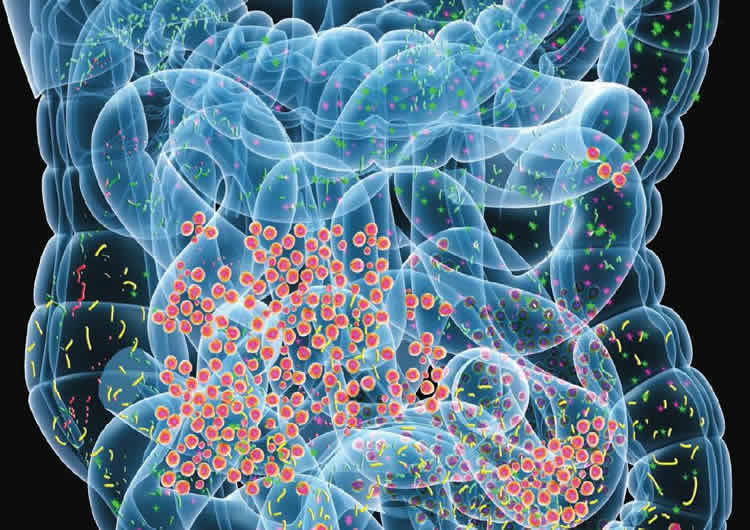
Image Source: NeuroscienceNews.com image is in the public domain.
Original Research: Abstract for “Bidirectional brain-gut interactions and chronic pathological changes after traumatic brain injury in mice” by Elise L. Ma, Allen D. Smith, Neemesh Desai, Lumei Cheung, Marie Hanscom, Bogdan A. Stoica, David J.,Loane, Terez Shea-Donohue, and Alan I.Fadena in Brain, Behavior and Immunity. Published online November 2017 doi:/10.1016/j.bbi.2017.06.018

5 комментариев
сначала старые сначала новые
--Исследователи из Университета штата Мэриленд (UMSOM) обнаружили двустороннюю связь между черепно-мозговой травмой (TBI) и изменениями в кишечнике. Эти взаимодействия могут способствовать усилению инфекций у этих пациентов и могут также ухудшить хроническое повреждение головного мозга.
энтеральная нервная система
http://ljsearch.metapractice.ru/?q=%D1%8D%D0%BD%D1%82%D0%B5%D1%80%D0%B0%D0%BB%D1%8C%D0%BD%D0%B0%D1%8F+%D0%BD%D0%B5%D1%80%D0%B2%D0%BD%D0%B0%D1%8F+%D1%81%D0%B8%D1%81%D1%82%D0%B5%D0%BC%D0%B0&mode=&brief=1&user=
ENS
http://ljsearch.metapractice.ru/?q=ENS&mode=simple&brief=1&user=
Enteric Nervous System
http://ljsearch.metapractice.ru/?q=Enteric+Nervous+System&mode=exact&in=everything&journals%5B%5D=2&journals%5B%5D=1&user=
--Это первое исследование, в котором выяснилось, что TBI у мышей может спровоцировать замедленные долгосрочные изменения в толстой кишке и что последующие бактериальные инфекции в желудочно-кишечной системе могут увеличить посттравматическое воспаление головного мозга и связанную потерю ткани. Выводы были опубликованы недавно в журнале Brain, Behavior и Immunity.
В рамках патофизиологии м.б. это первое исследование, но в рамках нормальной физиологии, кажется, подобные исследования имеют давнюю историю.
--Неясно, как TBI вызывает эти изменения кишечника. Ключевым фактором в этом процессе могут быть энтерические глиальные клетки (EGCs), класс клеток, которые существуют в кишечнике. Эти клетки подобны астроглиальным клеткам мозга, и оба типа глиальных клеток активируются после TBI. После TBI такая активация связана с воспалением мозга, что способствует задержке повреждения тканей в головном мозге. Исследователи не знают, активизирует ли ЭКГ после ТБИ повреждение кишечника или вместо этого пытается компенсировать травму.
Патофизиология клетки глии в нервной системе кишечника и в центральной нервной системе. Да ещё иммунитет. Получается, что связь ЦНС и ENS не только «сигнальная», но и некая биохимическая.
![[userpic]](/media/13d872ec9f767ad8008e6f82e03d7d42b2046c53f7eed93d1d56b0786c852e74)
(1) Unconscious5 conflict and indecision within the psyche gives rise to anxiety
against which defenses are erected. These defenses prevent both unconscious
resolution of the conflict and its emergence into consciousness, and may result
in inhibition of thinking, confusion, interference with activity.
(2) An unconscious conflict may be resolved unconsciously.
9
(3) The result produced by this unconscious work is evidenced by the emergence
into consciousness of a thought, or a decision, which the person explains
either in terms of some unconscious derivatives, more or less symbolized, or
by a rationalization.
(4) Such unconscious activity can be influenced, accelerated, or retarded by a
relationship with another person.