
A Standard Model of the Mind:
Toward a Common ComputationalFramework across Artificial Intelligence, Cognitive Science, Neuroscience, andRobotics
Abbreviated Title: A StandardModel of the Mind
John E. Laird (University ofMichigan), Christian Lebiere (Carnegie Mellon University), and Paul S.Rosenbloom (University of Southern California)
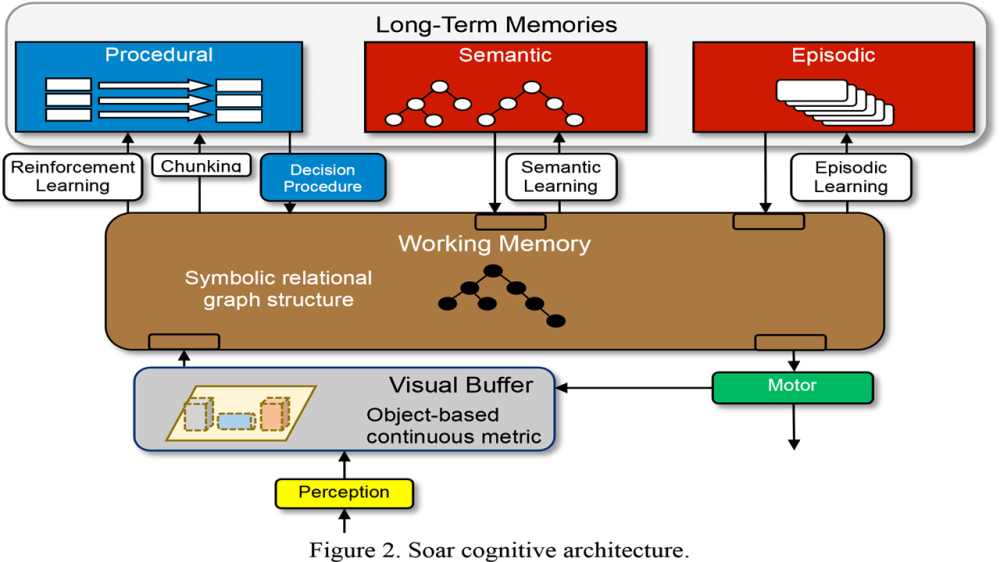
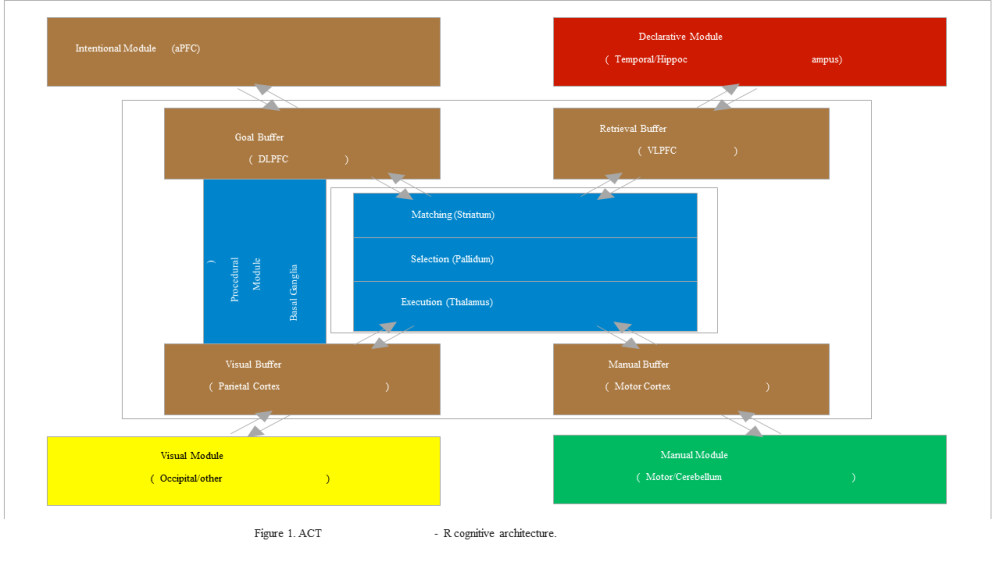
Abstract . A standard modelcaptures a community consensus over a coherent region of science, serving as acumulative reference point for the field that can provide guidance for both research and applications,while alsofocusing efforts to extend or revise it. Here we propose developing such amodel for humanlike minds,computational entities whose structures and processes are substantially similarto those found in human cognition. Our hypothesis is that cognitivearchitectures provide the appropriate computational abstraction for defining astandard model, although the standard model is not itself such an architecture.The proposed standard model began as an initial consensus at the 2013 AAAI FallSymposium on Integrated Cognition, but is extended here via a synthesis acrossthree existing cognitive architectures: ACT-R, Sigma, and Soar. The resulting standard model spans keyaspects of structure and processing, memory and content, learning, andperception and motor; highlighting loci of architectural agreement as well asdisagreement with the consensus while identifying potential areas of remainingincompleteness. The hope is that this work will provide an important steptowards engaging the broader community in further development of the standardmodel of the mind.
Keywords: Standard model, cognitive architecture,artificial intelligence, cognitive science, robotics, neuroscience
https://www.dropbox.com/s/z50a70vl8sn3all/LLR-SMM-AI%20Magazine-Published-Personal.pdf?dl=0
https://www.facebook.com/akolonin/posts/10208609476913605
Мой интерес посмотреть на этот материал бегло и найти какие-то посказки в отношении того, В КАКОМ КЛЮЧЕВОМ МЕСТЕ какие из известных нам феноменов ЧА "указывать"/ провозглашать феноменологически неграмотным людям. В надежде на чудесное прозрение.
Если вы озаботились объективацией тревоги, то её следует проводить не со стороны определения характерных стимулов. Ей следует начинать описывать со стороны ТИПИЧНОЙ КИНЕСТЕТИКИ.
--переживание, возникающее на внезапный стимул. Например, что-то интенсивно грохнуло. Интенсивность + внезапность могут вызвать быстрый вырос адреналина. Но, в таком реагировании может не быть страха. Это испуг. Испуг это интенсивное быстрое реагирование на неких сильных/ внезапный запороговый стимул. Прошёл стимул, переработали ферменты адреналин и все дела.
--на качественном графике страха изображена (но не отмечена) линия НАРАСТАНИЯ/ МАНИФЕСТАЦИИ СТРАХА. Обратное его развитие в общем виде имеет другой вид. Гормоны и нейромедиатры внезапно не рассасываются.
Дочитали до конца.